My Journey
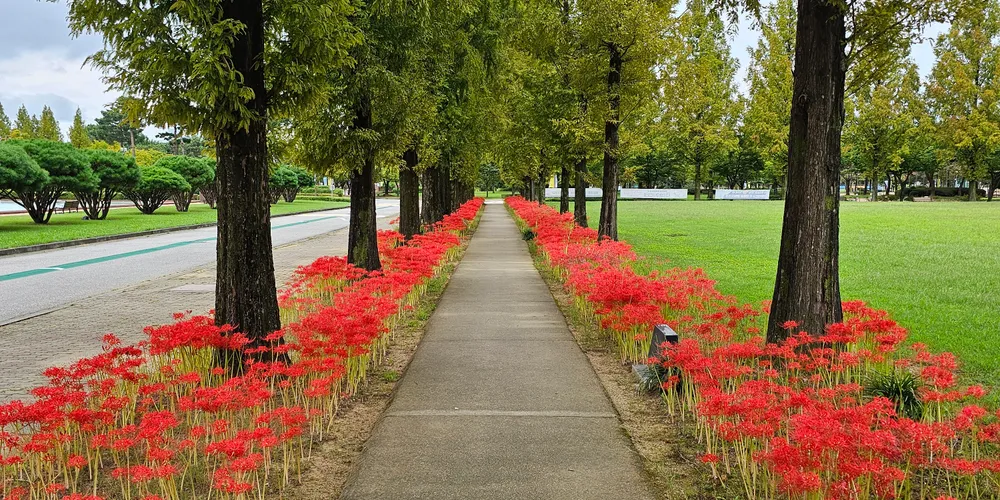
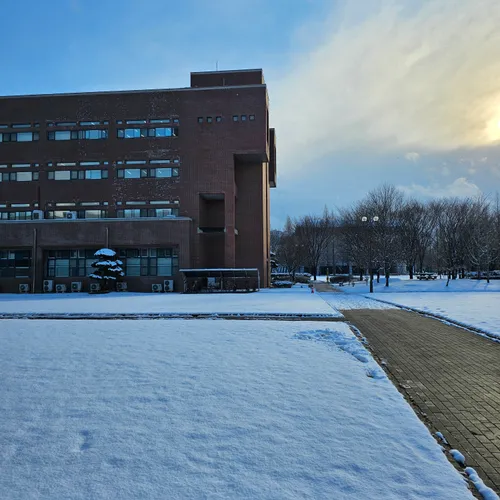
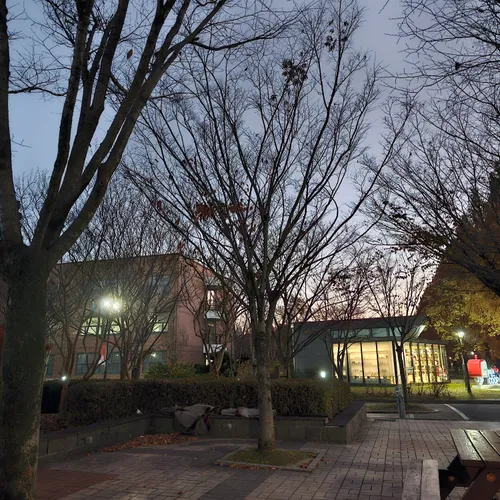
This is the short version of my own timeline — from the moment I decided to apply, to actually settling into life here. I've split it into three parts. Each one links out to the fuller guides on this site if you want the detailed version of that step.
Application
I didn't know about direct, professor-funded routes at first — like most people, I only knew about GKS. Once I found out labs in Korea often fund their own RA students directly, I skipped GKS entirely and went straight to cold-emailing professors whose research matched what I'd worked on.
A few things pushed me away from GKS specifically:
- It's extremely competitive — I didn't like my odds.
- Applying to multiple universities gets expensive fast. Most application portals charge a registration fee, and it's never guaranteed you get it back if your application doesn't succeed — if you have the budget to absorb that risk across several universities, that's an option, but I didn't.
- Educational agencies weren't much help either. When I told one I specifically wanted universities that didn't charge a registration fee, they weren't interested in helping me find those.
So I did the research myself and looked specifically for universities without those barriers — that's how I found mine.
Pre-Departure
Once a professor confirmed my funding, the work shifted from applications to logistics: sorting out my D-2 visa, budgeting for the weeks before my stipend would actually start, and getting a Wise card and a Klook eSIM ready before I flew so I wasn't scrambling for cash or data the moment I landed.
The documentation side turned out to be more complicated than I expected, since it was my first time doing any of this — multiple visits to different government ministries, getting documents apostilled, and a lot of waiting around, since some government offices just take their time. I'm lucky I can drive, and my dad came along more than once to sit through the waiting with me. Thanks, Dad!
Onboarding
Landing was just the start of another checklist: applying for my ARC, opening a Korean bank account, getting a local SIM, and figuring out which apps actually run daily life here. The first few weeks were less about the lab and more about admin.
I still remember my first day clearly: after landing in Incheon, I took a bus by myself all the way to Gwangju. There's no student representative waiting for you at the airport — you're handed a short PDF guide and expected to figure the rest out yourself.
Before You Reach Campus
- Report your arrival to GIST's International Affairs office (IPA) and your professor at least 24 hours in advance, with your exact date and time. Do this on a weekday — nobody's available to help on weekends.
- Notifying your professor early lets them arrange for a lab member or lab leader to help you with building access, dorm keys, and other security details when you arrive.
Getting from Incheon to Gwangju
- Bus: Direct from Incheon to Gwangju, about ₩20,800 (~RM70–80), roughly 4 hours.
- Private car/driver: Technically an option, but expensive for a drive this long — I checked with several drivers, including local ones, and it wasn't worth it.
- Flight: From Incheon or Gimpo to Gwangju Airport (KWJ), around ₩80,000+ (~RM300+), under 30 minutes in the air.
From Gwangju Bus Station or Gwangju Airport to Campus
- Taxi: From either U-Square Bus Terminal or Gwangju Airport (KWJ) — about 20 minutes.
- Bus: Only runs from U-Square, not from the airport, and takes about an hour. Fair warning — drivers aren't thrilled if you're hauling big luggage onto the bus (learned that one the hard way).
Once You Arrive on Campus
- Head to the Administration building and meet the IPA staff — they handle your dorm registration.
- If you've already arranged a time to meet your professor, go see them no matter how busy you are settling in. Showing up on time says a lot about your dedication.
- You'll join a week-long onboarding program with the rest of your batch — campus walks, orientation activities, and similar. Professors generally don't mind if you're not in the lab yet during this week, since they know you're occupied with onboarding.
- During onboarding, staff will guide you through submitting documents for your Alien Registration Card (ARC) and other registrations — you just need to follow their instructions. Don't be late to any of these sessions unless you have a real excuse (like being sick); punctuality matters a lot here.
Necessities (Food & Other Stuff)
Day-to-day life here comes with its own learning curve once the paperwork is done. Here's what I've picked up about food, the dorm, and the practical stuff nobody mentions until you need it.
1. Halal Food
Don't expect many options around here. There are only a few halal restaurants nearby — one Indonesian restaurant just 10 minutes on foot, and a couple of Uzbekistan restaurants besides that. Other than those, I mostly cook my own food or go for seafood restaurants. If you don't mind, the shrimp burgers at Lotteria and McDonald's are also an option.
There's a GS25 right inside campus, so you don't even have to walk outside for basic convenience store stuff. There are also plenty of CU and other convenience stores just outside campus, and they're really close by too.
2. Public Kitchen
There's a shared kitchen on campus with multiple stoves, so you don't have to worry about not finding space to cook. You'll need ₩100 coins to use a stove — each 100 won gets you 20 minutes, and you just add more coins if you need longer. If you don't have coins on hand, there's a bank inside the university where you can change cash into coins.
There's also a refrigerator in the public kitchen, and you'll be assigned your own space in it later — so your food won't get mixed up with anyone else's.
3. Woori Bank
This university is linked with Woori Bank, so all payments and related admin go through them. You can only open a Korean bank account once you have your ARC, so until then, you'll need to rely on an international card from your home country, or something like Wise or BigPay.
4. Fresh Food (Chicken, Meat, Vegetables, Fruits, Herbs)
You can buy fresh food — including halal options — through the Coupang app. The Indonesian restaurant also sells things like kicap (soy sauce), Maggi/Mi Sedaap, minyak angin (oil), and snacks like kerepek. There are also several grocery stores nearby if you'd rather shop in person, but honestly, I'm usually too lazy (and during winter, too cold) to go out, so I just order from Coupang. If you order fresh produce before midnight, it typically arrives by 6–7 AM the next morning.
5. Dormitory
Dorms are separated by gender in the older dorm building. The newer dorm building has a private, en-suite toilet in every room instead of a shared one — floors 1–6 are for guys, and floors 7–9 are for girls. Rooms in the new building also come with their own private balcony.
Every dorm room comes with its own microwave. If you're lucky, you might also end up with a free refrigerator that a previous occupant left behind in the room — not guaranteed, but it happens.
6. Beddings & Furniture
Everything's included — each room comes fully furnished with a desk lamp, study desk, chair, bed and beddings, closet, heater, and AC.
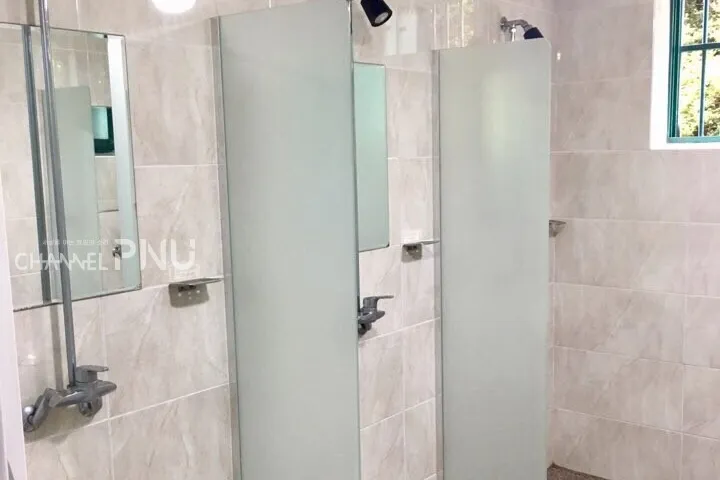
7. Shower Room
In the older dorm building, showers are shared by gender, with a shower room on every floor. All of them are set up the same way — just small curtains separating each shower space. It caught me off guard the first time, but you get used to it pretty quickly.
8. Toilet
Every toilet has a bidet, so there's no need to worry about running out of water. Tissue is also provided in every toilet. Personal items like shampoo and body wash are on you to bring, but you don't need to pack much — Daiso has everything, and there's more than one location just a short walk away.
Departments & Related Courses at GIST
Since this whole site is built around the direct-lab-funding route, here's the current list of graduate departments/programs at GIST, pulled from their official site — useful as a starting point when you're shortlisting labs:
- Electrical Engineering and Computer Science
- Materials Science and Engineering
- Mechanical and Robotics Engineering
- Environment and Energy Engineering
- Life Sciences
- Physics and Photon Science
- Chemistry
- Biomedical Science and Engineering
- AI Convergence
- Semiconductor Engineering
- AI Policy and Strategy
- Integrated Neuroscience and Physiology
- Mathematical Sciences (M.S. only — no Ph.D. track)
All of these offer M.S. and Ph.D. tracks (with an integrated M.S./Ph.D. option) except Mathematical Sciences, which is M.S. only. Double-check the department page directly before you rely on this, since programs do get added or restructured.